
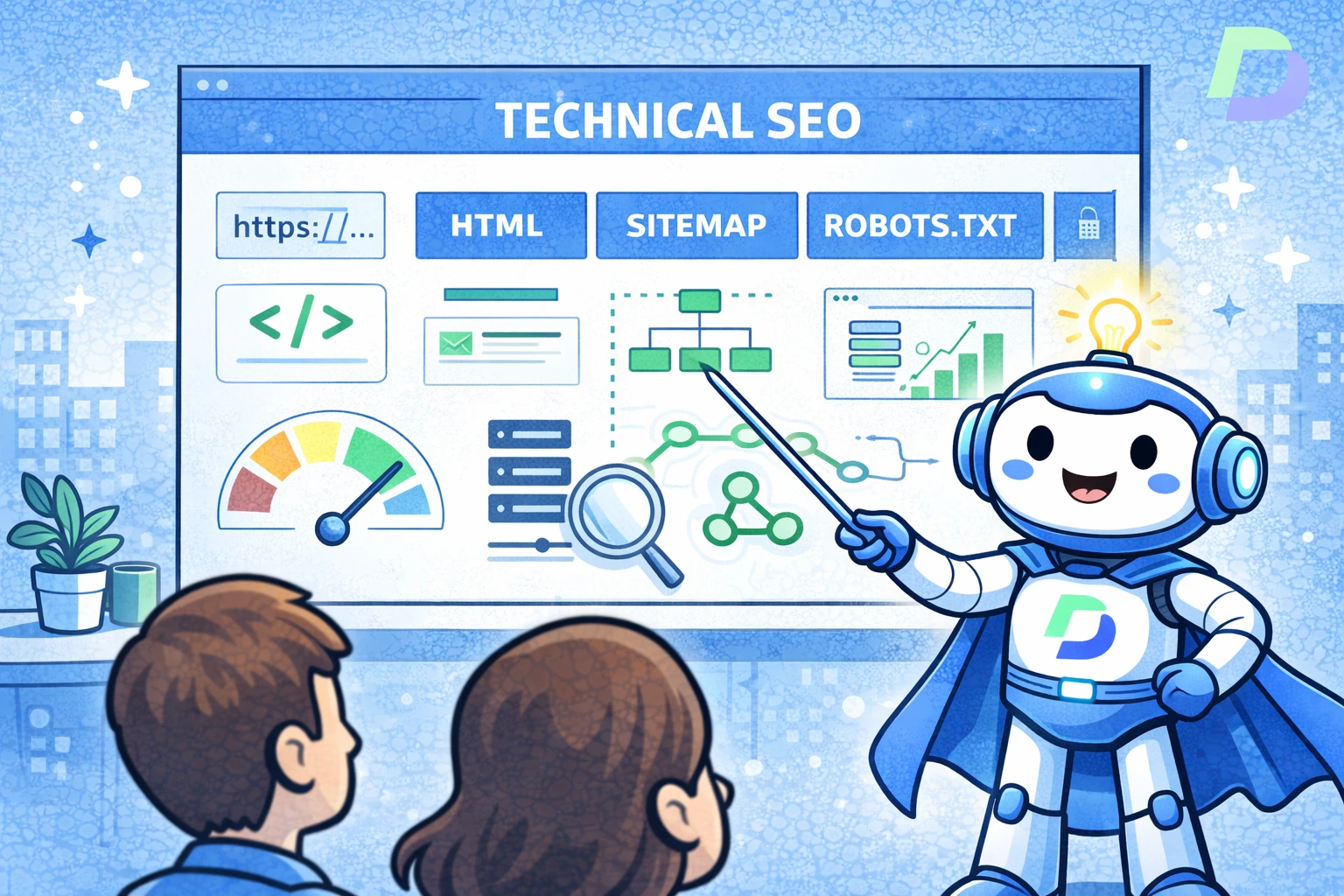
If you’ve been wondering why your website isn’t showing up in Google search results despite having great content, the answer might lie in something you can’t see: your website’s technical foundation. Technical SEO is the behind-the-scenes work that makes your site visible, accessible, and favorable to search engines. Unlike content optimisation or link building, technical SEO focuses on the infrastructure that allows search engines to find, crawl, understand, and rank your website effectively.
What Is Technical SEO?
Technical SEO encompasses all the optimisation efforts that improve how search engines access, interpret, and index your website. While traditional SEO focuses on keywords and content quality, technical SEO addresses the structural and performance elements that enable search engines to do their job efficiently.
Think of it this way: if your website were a physical store, technical SEO would be everything from the foundation and electrical systems to the layout that helps customers navigate easily. Without these fundamentals in place, even the best products won’t attract customers.
Technical SEO includes several core elements including site speed, mobile responsiveness, crawlability, indexability, site architecture, security protocols, and structured data implementation. Each of these components plays a distinct role in determining how well your website performs in search results.
Why Technical SEO Matters for Rankings
Search engines like Google use sophisticated algorithms to evaluate websites and determine which ones deserve top positions in search results. Technical SEO directly influences these evaluations in measurable ways.
According to research from Backlinko, websites loading in two seconds show an average bounce rate of just 9%, while sites taking five seconds experience a 38% bounce rate. This massive difference in user behavior sends clear signals to search engines about site quality and user satisfaction.
Google has explicitly confirmed that site speed is a ranking factor for both desktop and mobile searches. While content relevance remains the primary ranking determinant, technical performance becomes the deciding factor when multiple sites offer similar quality content. In competitive markets, technical excellence can mean the difference between first-page visibility and obscurity.
Essential Technical SEO Elements
Site Speed and Core Web Vitals
Page speed has evolved from a nice-to-have feature to a critical ranking factor. Google introduced Core Web Vitals as part of its page experience update, establishing specific metrics that measure real-world user experience.
These metrics include Largest Contentful Paint (how quickly main content loads), First Input Delay (how quickly the page becomes interactive), and Cumulative Layout Shift (visual stability during loading). Websites meeting Google’s Core Web Vitals standards experience 24% higher user engagement according to industry studies.
Improving site speed requires multiple optimisation strategies. Compressing images prevents unnecessarily large files from slowing page loads. Minimising JavaScript and CSS files reduces the amount of code browsers must process. Implementing browser caching allows returning visitors to load pages faster by storing certain elements locally. Content delivery networks distribute your site’s files across multiple servers globally, ensuring faster access regardless of user location.
Mobile Optimisation
With mobile devices generating nearly 60% of global website traffic, mobile-friendliness has become non-negotiable for SEO success. Google now uses mobile-first indexing, meaning it primarily evaluates the mobile version of your site when determining rankings.
Mobile optimisation extends beyond responsive design. Your mobile site must load quickly despite potentially slower network connections. Touch elements need adequate spacing to prevent accidental clicks. Text must remain readable without requiring zooming. Pop-ups and interstitials should not obstruct content access on smaller screens.
Websites optimised for mobile devices are 67% more likely to rank on Google’s first page. This dramatic advantage stems from both algorithmic preferences and improved user experience that leads to better engagement metrics.
Crawlability and Indexability
Before Google can rank your website, its crawlers must first discover and access your pages. Crawlability refers to search engine bots’ ability to navigate and read your site’s content.
Your robots.txt file plays a crucial role in crawl budget management. According to Search Engine Land, strategic robots.txt configuration can reduce server load by up to 30% for large sites while ensuring crawlers focus on your most valuable content.
XML sitemaps complement robots.txt by providing search engines with a roadmap of your site’s structure and priority pages. While crawlers can discover content through internal links, sitemaps ensure nothing important gets overlooked.
Internal linking structure significantly impacts how thoroughly search engines crawl your site. A well-planned link architecture ensures every important page sits within three clicks from your homepage, making it easily discoverable.
Structured Data Implementation
Structured data markup helps search engines understand your content’s context and meaning. By adding schema markup to your pages, you provide explicit signals about whether content represents a product, article, event, recipe, or other specific type.
This enhanced understanding can lead to rich snippets in search results, displaying star ratings, prices, availability, author information, and other eye-catching elements that improve click-through rates.
Website Security (HTTPS)
Google explicitly uses HTTPS as a ranking signal. Sites with HTTPS encryption receive a small ranking boost, but more importantly, browsers now flag HTTP sites as “not secure,” eroding user trust and increasing bounce rates.
The transition from HTTP to HTTPS requires obtaining an SSL certificate and properly implementing redirects to ensure all traffic flows to the secure version. Improper migration can cause significant ranking drops, making careful execution essential.
Common Technical SEO Mistakes to Avoid
Blocking Important Resources
Many sites accidentally block CSS or JavaScript files in robots.txt, preventing Google from properly rendering pages. This makes it impossible for search engines to evaluate page layout, user experience, or even access content that loads via JavaScript.
Ignoring Broken Links
Broken links frustrate users and waste crawl budget as search engines repeatedly attempt to access non-existent pages. Regular audits using tools like Screaming Frog or SEMrush help identify and fix these issues before they impact performance.
Neglecting Mobile Performance
Some sites achieve fast desktop speeds but deliver poor mobile experiences due to unoptimised images, heavy scripts, or complex layouts that struggle on mobile processors. Testing mobile performance separately ensures your site performs well for the majority of users.
Duplicate Content Issues
Without proper canonical tags, search engines may encounter multiple versions of the same content across different URLs. This dilutes ranking signals and confuses search algorithms about which version deserves priority.
How to Improve Your Technical SEO
Start by conducting a comprehensive technical audit using Google Search Console, which identifies crawl errors, mobile usability issues, and Core Web Vitals performance. Supplement this with tools like Google PageSpeed Insights for detailed speed recommendations.
Address high-impact issues first. If your site takes more than three seconds to load, prioritising speed improvements will deliver immediate benefits. If crawl errors prevent indexation, fixing these becomes the urgent priority.
Implement changes incrementally and monitor results. Technical modifications can sometimes have unintended consequences, so careful observation helps catch problems quickly. Use Google Search Console’s URL Inspection tool to verify that changes achieve intended results.
Consider the interconnected nature of technical SEO elements. Improving site speed often requires image optimisation, which may involve implementing lazy loading, which connects to user experience improvements. These synergies mean comprehensive technical SEO strategies deliver compounding benefits.
The Bottom Line
Technical SEO forms the foundation that supports all other optimisation efforts. Without proper technical implementation, even exceptional content struggles to achieve visibility. By ensuring your site loads quickly, functions flawlessly on mobile devices, remains easily crawlable, and implements current best practices, you create the optimal environment for search success.
The technical landscape continues evolving as search engines become more sophisticated and user expectations rise. Websites that prioritise technical excellence position themselves for sustainable long-term success in an increasingly competitive digital environment. Whether you manage technical SEO yourself or partner with specialists, understanding these fundamentals enables informed decisions that drive meaningful results.
Technical SEO isn’t a one-time checklist but an ongoing commitment to maintaining and improving your website’s infrastructure. Regular audits, staying current with algorithm updates, and proactively addressing emerging issues ensure your technical foundation remains solid as your site grows and search engines evolve.